
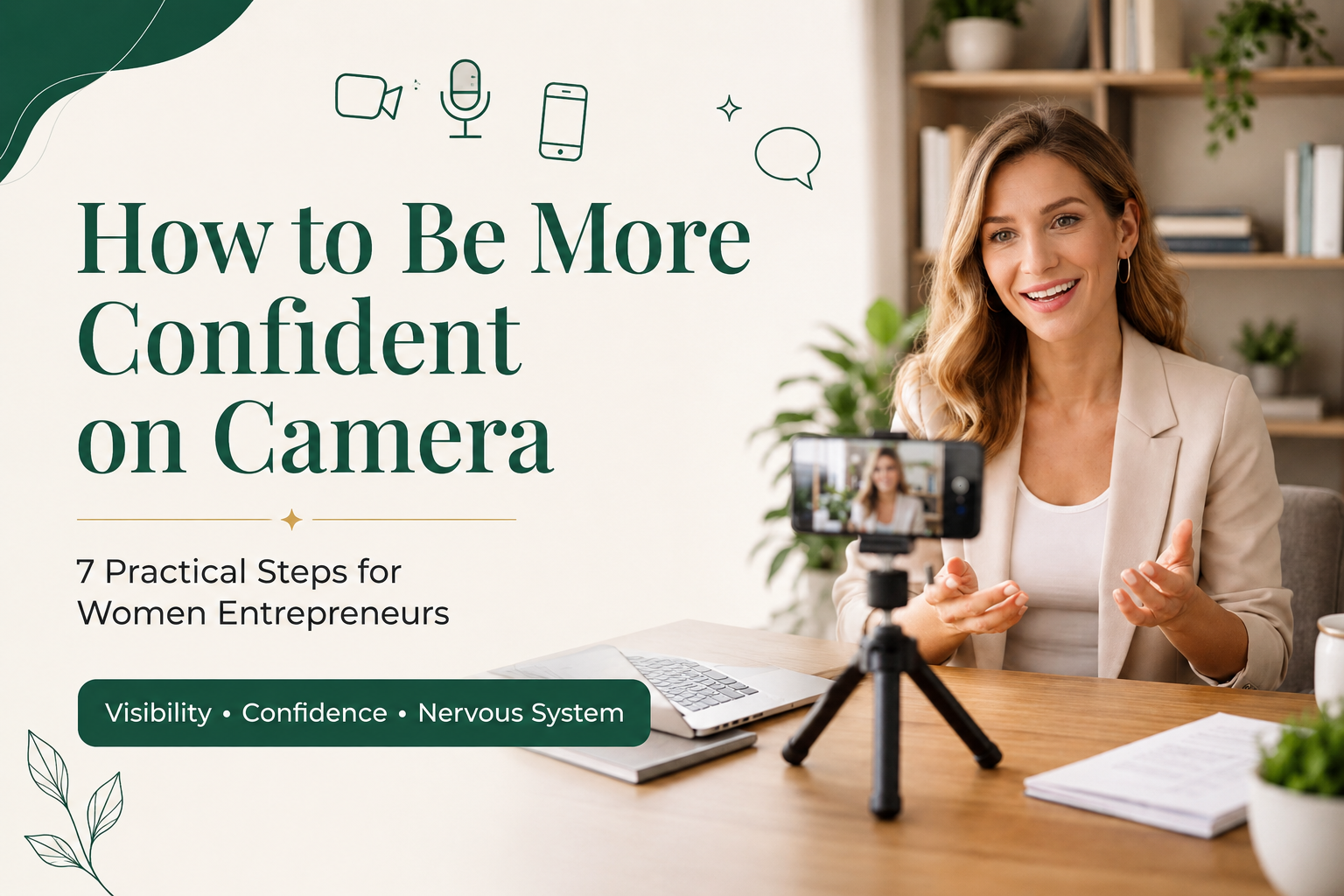
How to Be More Confident on Camera: 7 Practical Steps for Women Entrepreneurs
"You know video could help grow your business. You know people connect with people. But every time you press record, your heart races, your mind goes blank, and suddenly you forget everything you wanted to say."
If recording an Instagram Reel or talking to your audience on camera makes your stomach tighten, you're not alone. Many women entrepreneurs struggle with camera confidence not because they lack expertise, but because being seen can feel deeply vulnerable.
The good news? Confidence on camera isn't something you're born with. It's something you build.
Why It's So Hard to Feel Confident on Camera
Most people believe confidence comes first.
They think:
"Once I'm confident, I'll start posting."
"Once I stop feeling awkward, I'll record videos."
"Once I'm more polished, people will take me seriously."
But confidence isn't the starting point.
It's the result of taking small, consistent steps while learning to feel safe being seen.
The Real Reason You Freeze on Camera
This isn't just a confidence issue.
For many women, it's a nervous system response.
Your body may interpret visibility as a threat because of past experiences with criticism, rejection, perfectionism, or the fear of being judged.
When that happens, your nervous system shifts into protection mode.
You might:
Overthink every word
Delete videos before posting
Avoid recording altogether
Feel physically tense
Believe you're "not good on camera"
Your body isn't trying to sabotage you.
It's trying to keep you safe.
7 Practical Steps to Feel More Confident on Camera
1. Regulate Your Nervous System Before You Record
Instead of jumping straight into filming, spend two or three minutes helping your body feel grounded.
Try:
Deep breathing
Gentle stretching
Shaking out tension
Relaxing your jaw and shoulders
A regulated body makes authentic communication much easier.
2. Focus on One Person, Not an Audience
Instead of imagining hundreds of people watching your video, picture one ideal client who genuinely needs what you have to say.
Speak to her.
Not the algorithm.
3. Stop Trying to Sound Perfect
Authenticity builds trust.
Your audience isn't looking for perfection.
They're looking for someone real.
Small pauses, laughter, and natural conversation often create stronger connections than scripted delivery.
4. Record More Than You Post
Confidence grows through repetition.
Practice filming short videos without the pressure of publishing every single one.
Every recording helps your brain recognize that being visible is safe.
5. Keep Your Message Simple
Don't try to teach everything at once.
Instead, answer one question.
Solve one problem.
Share one story.
Simple messages are easier to deliver—and easier for your audience to remember.
6. Reframe Visibility as Service
Instead of asking:
"What if people judge me?"
Ask:
"What if someone needs this message today?"
When your focus shifts from yourself to the person you're here to help, showing up becomes an act of service rather than performance.
7. Celebrate Progress, Not Perfection
Every video is a step forward.
Confidence doesn't appear overnight.
It grows every time you choose visibility despite discomfort.
Confidence Is Built Through Safety, Not Perfection
One of the biggest misconceptions about visibility is believing you have to eliminate fear before you can show up.
In reality, courage often comes first.
Confidence follows.
When your nervous system learns that it's safe to be seen, your voice becomes steadier, your message becomes clearer, and showing up online starts to feel more natural.
Your Voice Is Someone Else's Breakthrough
There are women searching Google right now for the answers you already carry.
They're looking for encouragement.
For guidance.
For someone who understands what they're going through.
If you continue hiding because you're waiting to feel "ready," they may never hear the message that could change their life.
Your visibility isn't about becoming famous.
It's about becoming available to the people you're here to serve.
Learning to feel confident on camera isn't just about improving your speaking skills or creating better Instagram Reels.
It's about building internal safety to let yourself be seen.
Because when your body feels safe, your message flows more naturally. You stop performing, start connecting, and create content that genuinely serves the women you're called to help.
If you're ready to move beyond surface-level confidence tips and create a visibility practice rooted in self-trust, nervous system safety, and aligned marketing, that's the deeper work we do together.
You don't have to become someone else to grow your business.
You simply have to feel safe enough to let the real you be seen.
